
Our Artificial Grass Installation Process
Every artificial grass installation we do follows the same three phases: we dig out and grade the ground, build a compacted base, then cut, seam and finish the turf. Here is what happens in each phase, so you know what you are paying for.




Phase 1: Dig out and grade
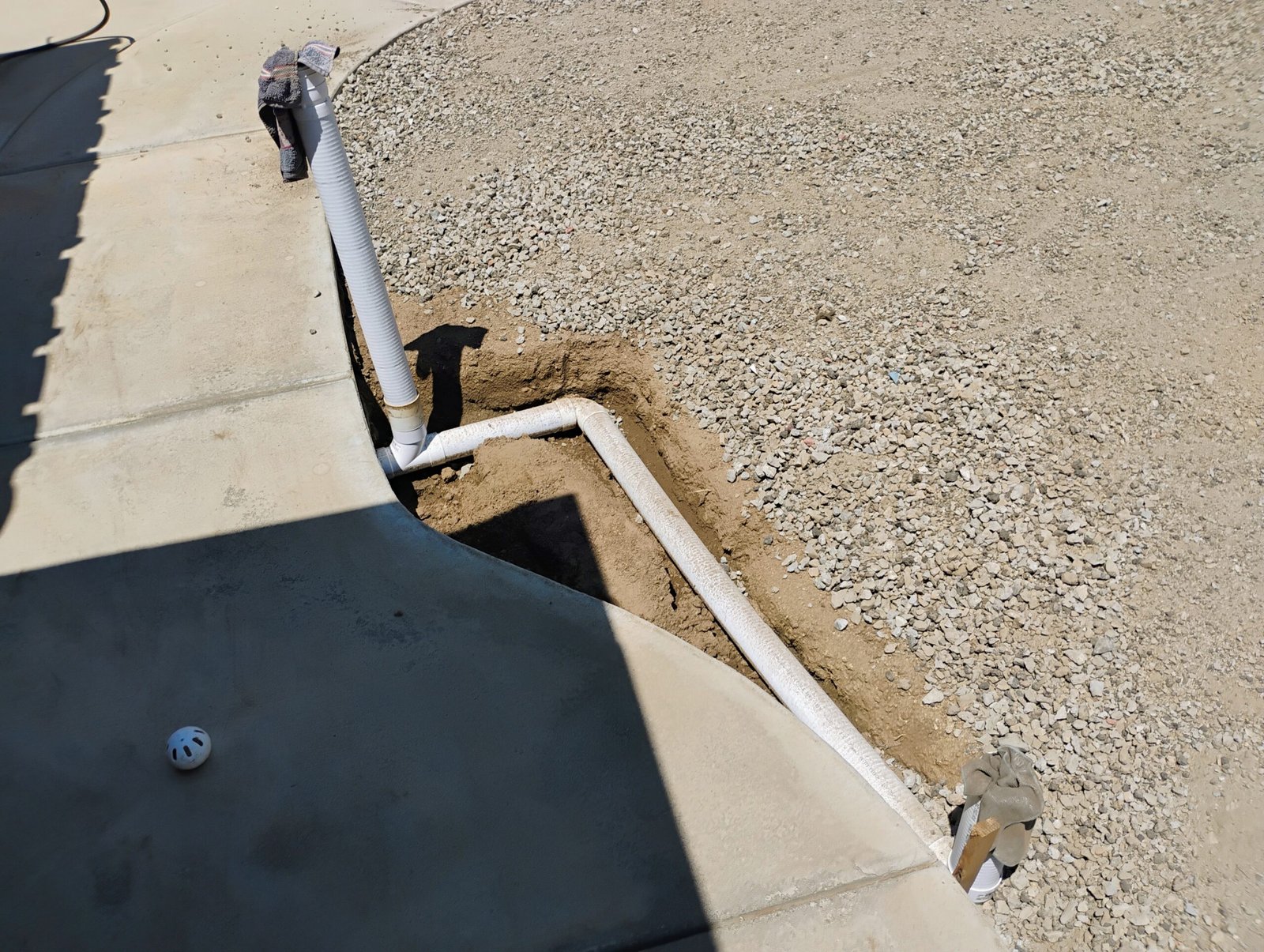
We remove about 3 inches of soil where needed. That takes out the old grass, its roots and the seed in the ground, so nothing grows back through your new lawn. Removing bushes or trees costs extra.
Then we grade the ground so water drains away from your house. It doesn’t rain often here, but when it does, the water needs somewhere to go. As a licensed synthetic grass contractor, we add drains and slope the ground so water never sits against your foundation.
Phase 2: Build the base
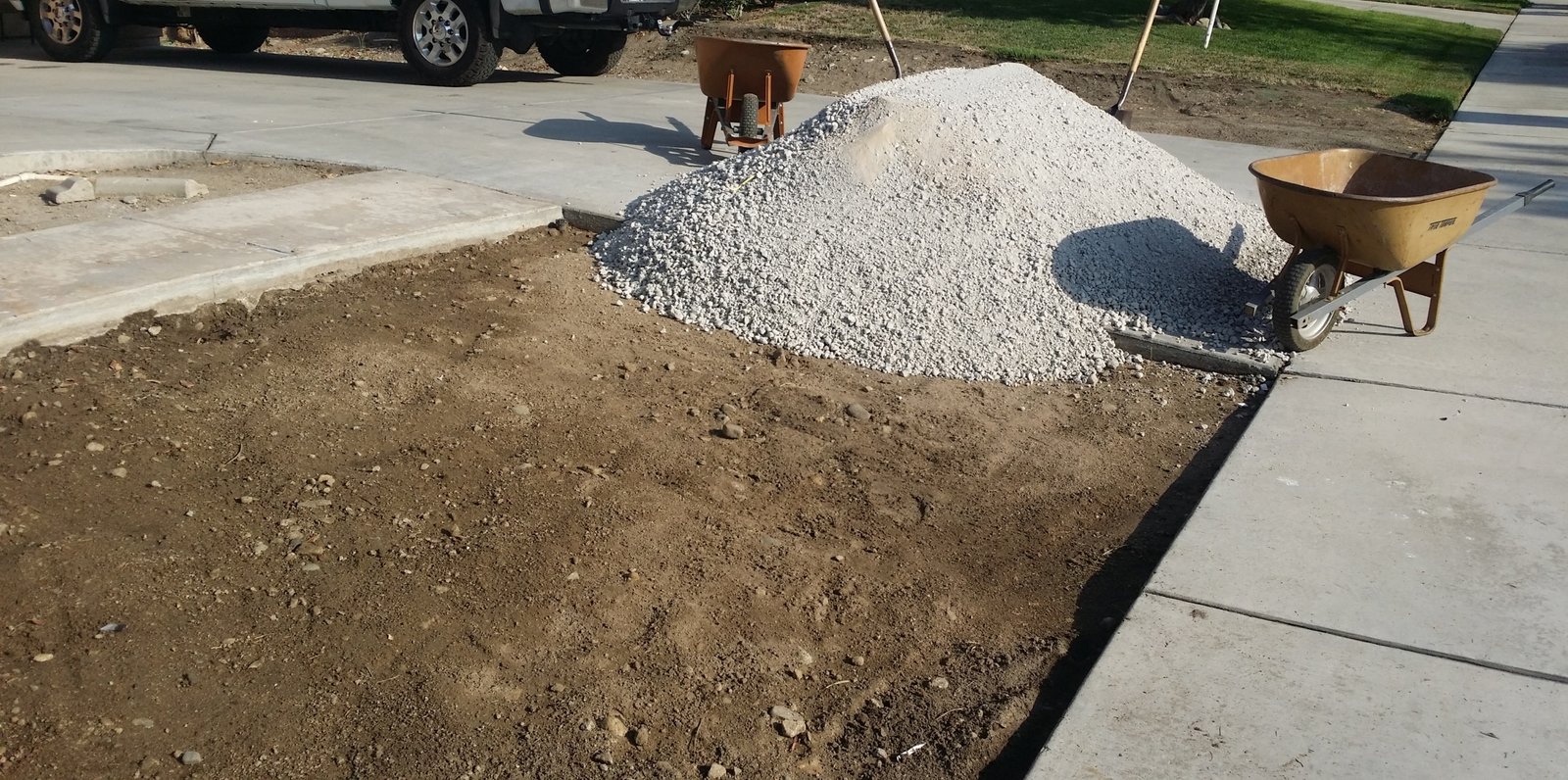
We compact 3 to 4 inches of Class II road base into place. It drains well and gives the turf a smooth, firm surface to sit on. Where the base needs a finer finish, we top it with decomposed granite (DG), which adds a little to the cost.
This is also when we handle everything that goes under or around the turf:
- Edging: where the lawn has an open border, we add bender board (the most cost-effective option), concrete or brick for a clean edge.
- Gopher wire: if you want it, it goes in now, under the base.
- Sprinklers: while the ground is open, we adjust your irrigation. We recommend capping every sprinkler under the turf at the valve. If planters outside the turf area still need water, we cap the turf sprinklers and keep that station feeding the planters.

Phase 3: Cut, seam and finish the turf
This is where it comes together. Our experienced technicians cut and seam the turf into place with tools made for the job, so the seams disappear and the lawn fits your yard’s curves.
- Stretch and secure: we stretch the turf and nail it along every edge. Each nail is set to pull the turf tight.
- Infill: you choose standard infill or pet infill. We add some zeolite under every installation, because we think every lawn should have some pet protection. Some of our turfs need no infill at all unless you have pets.
- Grooming: we finish with a power broom. It lifts the blades and settles the infill down against the backing, so the grass stands up.
That’s a standard installation. Custom designs can take more work, and after your free measure you’ll know exactly what your yard needs.
Installation questions
How is the turf held down?
Most lawns are installed over soil, so we use long nails (spikes) spaced evenly around every edge. Each one is placed and angled to pull the turf tight. On hard surfaces like concrete, we use spacers and adhesive instead.
Can you add planters?
Yes, and they change the look of a yard for very little extra cost. We can build a tree well for hand watering, or reroute your sprinklers to any planter we create. Planters are lined with a weed barrier and topped with decorative rock or bark.
What edging do you recommend?
Bender board is the most common and cost-effective edging. It bends into smooth curves and looks clean when it’s done right. Curbs, brick, pavers and rock edging are also available. We don’t recommend leaving an edge open.
What infill do you use?
Standard infill is sand, and we add some zeolite under every installation for extra protection. You can upgrade to antibacterial infill for a little more. Infill holds the blades up and adds weight, so the turf doesn’t wrinkle or shift in strong wind.
Should I add stepping stones or a path?
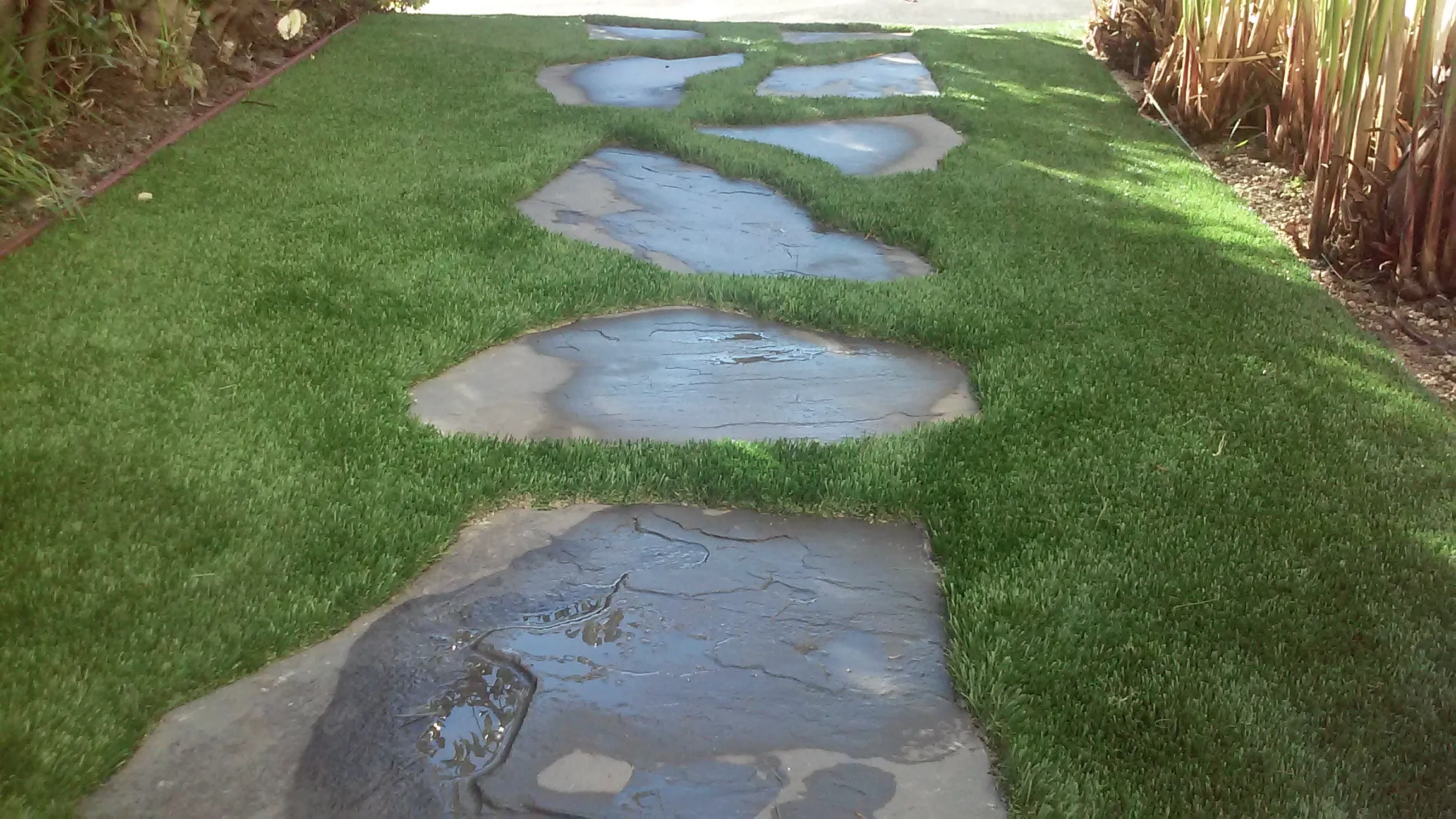
We recommend them anywhere people walk every day, like the path to a garage, shed or slab, because they keep that turf from wearing. We can lay turf strips between pavers or slabs, usually with 4 to 6 inch gaps, or cut stepping stones into the lawn as a path.
My yard is already dug out. Does that lower the price?
It can. If the area already sits 3 inches or more below grade, there’s less digging to do, so the installation may cost less.
Can you install the turf only?
Yes. Contractors and tradespeople who follow our installation specs can do the prep work, and we come in to cut, seam and finish the turf.
We mastered the art of the install, so you don’t have to
Book a free measure and we’ll bring samples to your home, walk the yard with you and explain exactly what your installation needs.