AB 1572 and Nonfunctional Turf: How HOAs and Businesses Keep a Green Look with Artificial Grass
If you manage a commercial property, sit on an HOA board, or run facilities for a public agency in Southern California, the grass along your sidewalks, entries and parking lots is on a deadline. California’s AB 1572 bans using drinking water to irrigate “nonfunctional turf,” and the first deadlines arrive in 2027. This guide explains what the law covers, who it applies to and when, and how properties are using artificial grass to stay compliant without losing curb appeal. It’s written by the people who install it.
AB 1572 is a California law that bans irrigating nonfunctional turf (decorative grass nobody uses) with potable water. It starts January 1, 2027 for public agency properties, January 1, 2028 for commercial, industrial and institutional properties, and January 1, 2029 for HOA common areas. Single-family homes aren’t covered. Artificial grass needs no irrigation, so it keeps those areas green after the deadline.
What is AB 1572?
AB 1572 was signed in 2023. It makes it illegal to water nonfunctional turf with potable water, meaning drinking-quality water from your water supplier, on certain kinds of property. It’s a permanent rule, not a drought emergency measure. It stays in force in wet years and dry years alike (State Water Resources Control Board).
AB 1572 deadlines by property type
| Property type | Potable water ban starts |
|---|---|
| Cities, counties, special districts and other public agencies (their own property) | January 1, 2027 |
| Commercial, industrial and institutional properties (offices, retail centers, industrial parks, schools, hospitals and more) | January 1, 2028 |
| HOA and common interest development common areas | January 1, 2029 |
| Single-family homes | Not covered |
Violations can bring civil liability and penalties under state water law (Best Best & Krieger). Your local water supplier may also have its own enforcement steps, so it’s worth checking with them.
What counts as nonfunctional turf?
Nonfunctional turf is mowed grass that’s there to look nice, not to be used. The state’s examples include grass in:
- Parkways and strips between the sidewalk and the street
- Medians, street rights-of-way and roundabouts
- Parking lot islands and borders
- Narrow strips along buildings, walls and walkways
- Entry monuments, slopes and grass that’s fenced off or otherwise not used
What’s exempt
Functional turf, grass that people really use, is not covered. That includes sports fields, playgrounds, picnic areas, event lawns, pet exercise areas and other spaces used for recreation or gatherings. The ban also doesn’t apply to trees and other plants that aren’t turf, to areas watered with recycled water, or where watering is needed for health and safety (State Water Board).
Most properties have both kinds. A typical HOA might have a well-used park lawn and dog area, plus thousands of square feet of decorative grass along streets and at the gate. Mapping which is which is the first step.
How artificial grass keeps the look without the water
AB 1572 is about watering living grass. Artificial grass isn’t irrigated, so once the decorative grass is replaced, there’s nothing left in that area for the ban to cover. The property keeps the same clean green frontage that tenants, residents and customers are used to, every month of the year, with no brown-out after the water is shut off.
Here’s how properties are already putting it to work:
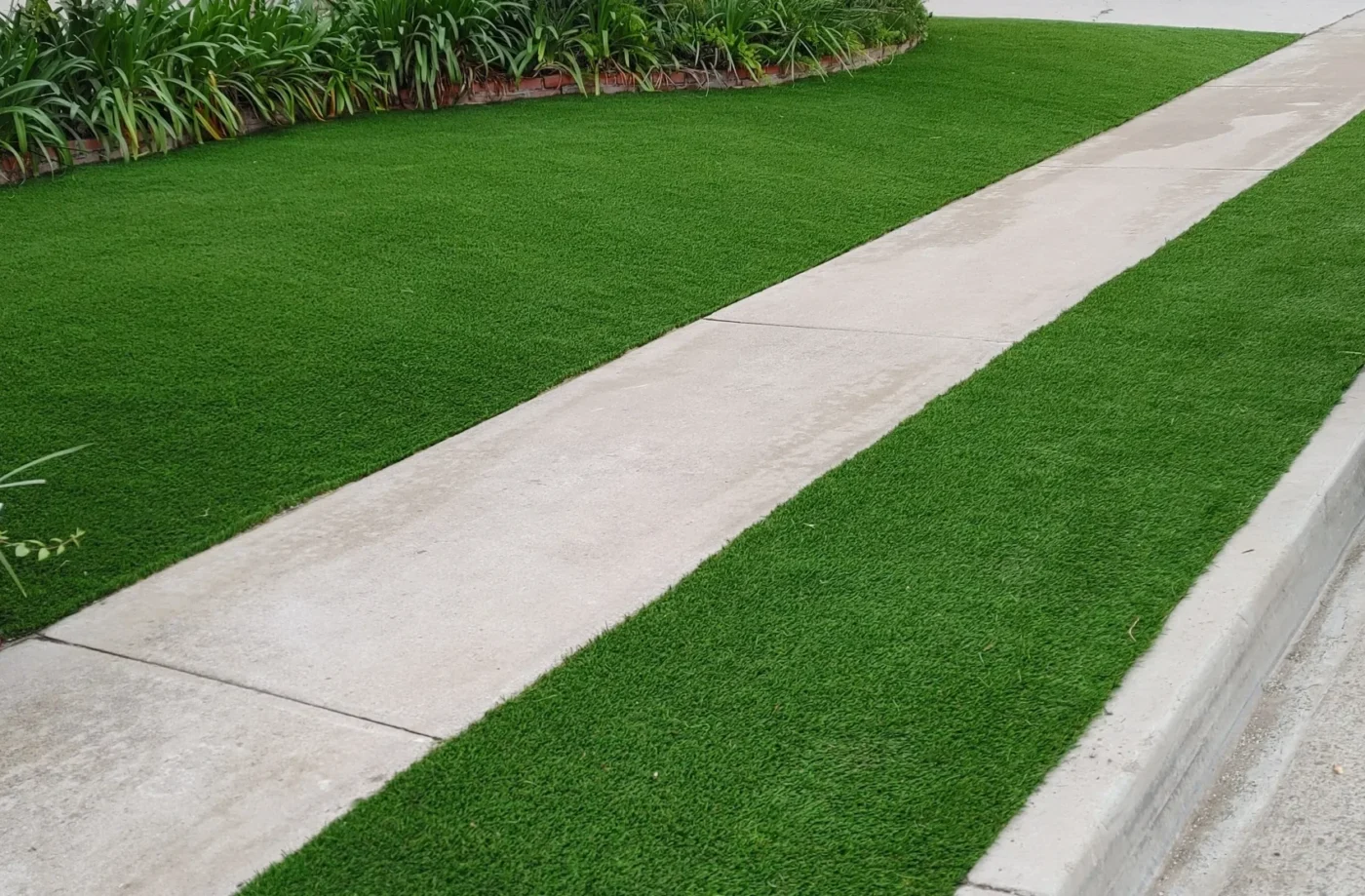
- Parkways and street frontage. The strips that are hardest to water efficiently and most visible from the road.
- Entries and monument signs. The first impression of a community or business, kept green year-round.
- Parking lot islands. No overspray on cars and pavement, and no muddy edges.
- Strips along buildings. No sprinkler water hitting walls, windows and foundations.
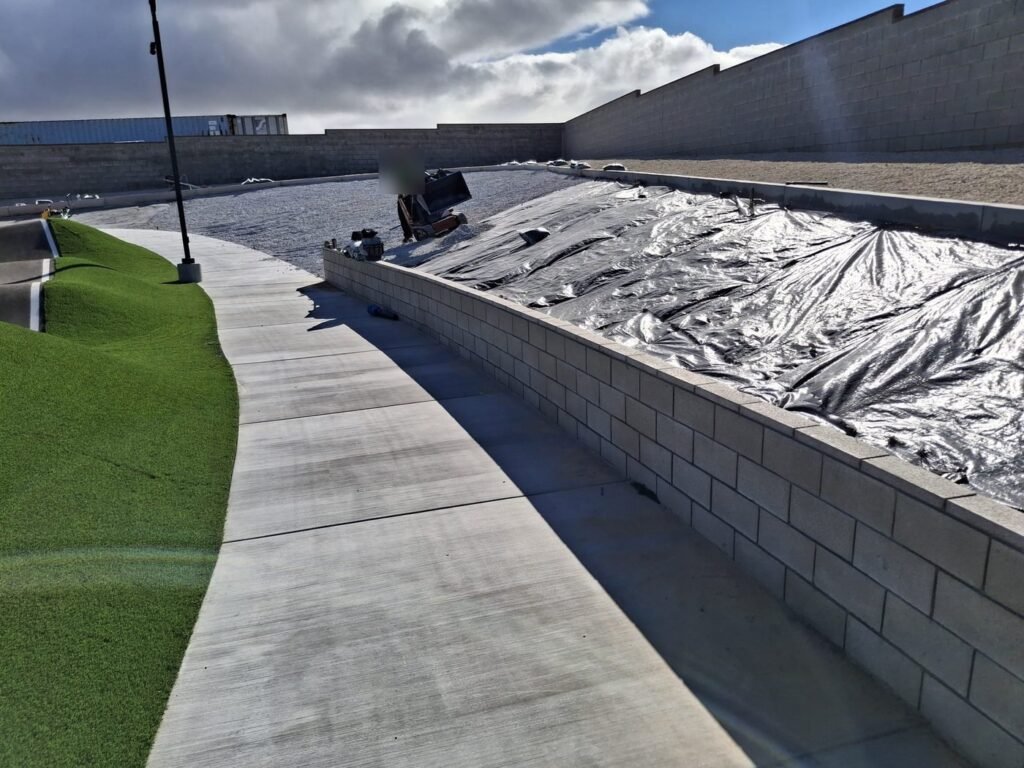
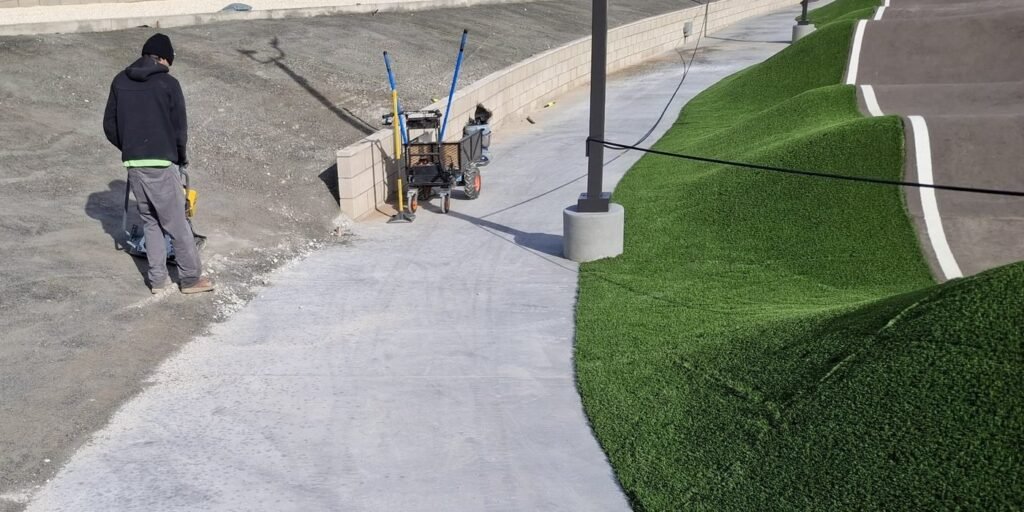
- Functional areas too. Dog runs, play areas and recreation spaces are exempt, but many properties convert them anyway to save water and upkeep. We recently finished turf on a commercial bike pump track.
Beyond the water, managers stop paying for mowing, edging, fertilizer, reseeding and sprinkler repairs in those areas. That’s one less line item in the landscape contract.
Why the installer matters more than the turf
We’ve all driven past artificial grass that looks wrong. It’s almost never the product. It’s the install. On a commercial or HOA property, a bad job is on display to everyone who drives in, and it’s paid for with association or owner money. These are the problems we see most when we’re called to fix someone else’s work:
- Visible seams. Lines where two rolls meet, or pieces laid with the grain running different ways so they look like two colors.
- Wrinkles and ripples. Turf that wasn’t stretched and secured, then expands in the summer heat.
- Dips, humps and puddles. A base that wasn’t graded and compacted, so it settles and holds water.
- Ragged edges. Gaps along curbs, sidewalks and planters, or edges that lift and curl.
- A flat, shiny “plastic” look. The wrong product for the spot, no infill, or blades never brushed up.
- Weeds pushing through. Old grass and roots that weren’t removed before the base went in.
Every one of those comes down to craftsmanship. For a closer look at what makes turf look real, see does artificial grass look real?
What’s under the turf: geotextile separation fabric
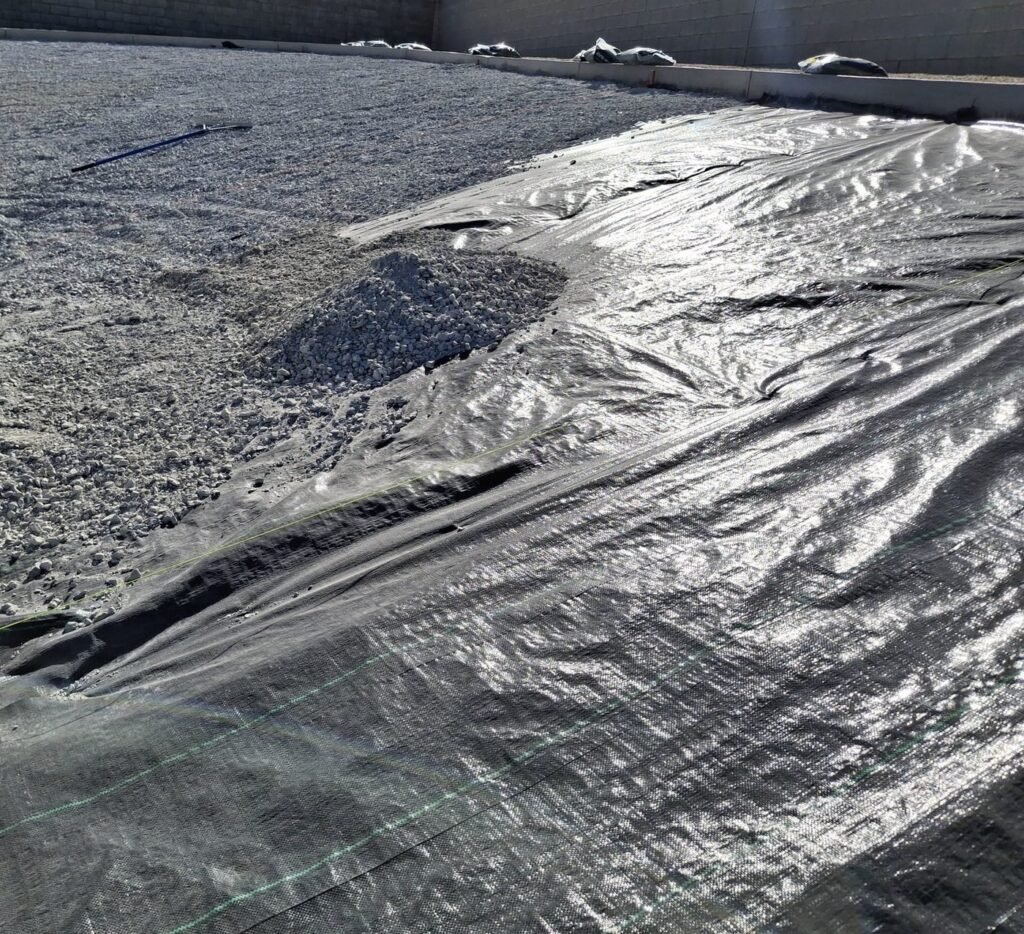
The part of a turf install nobody sees is the part that decides how it looks in five or ten years. On our HOA and commercial projects, before any rock goes down, we lay a geotextile separation fabric over the native soil. We call it geo barrier. It’s the same kind of fabric civil engineers specify under roads, parking lots and paths.
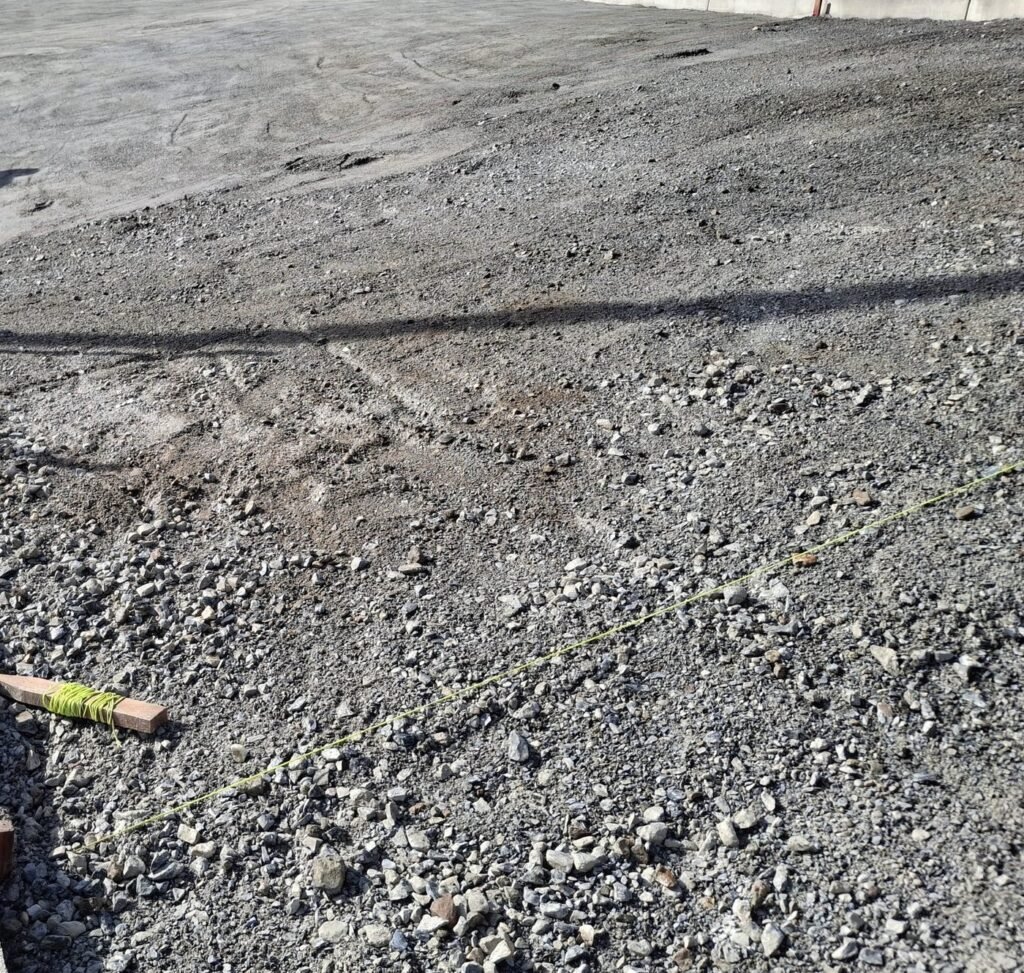
Here’s why it matters. Much of the native soil in Southern California is clay or silt. Over the years, water and foot traffic pump those fine particles up into the rock base, and the rock slowly pushes down into the soil. The base loses its drainage and its shape, and the turf on top shows it: soft spots, dips and puddles. A separation layer keeps the soil and the base apart, so the base stays clean, keeps draining and holds its grade.
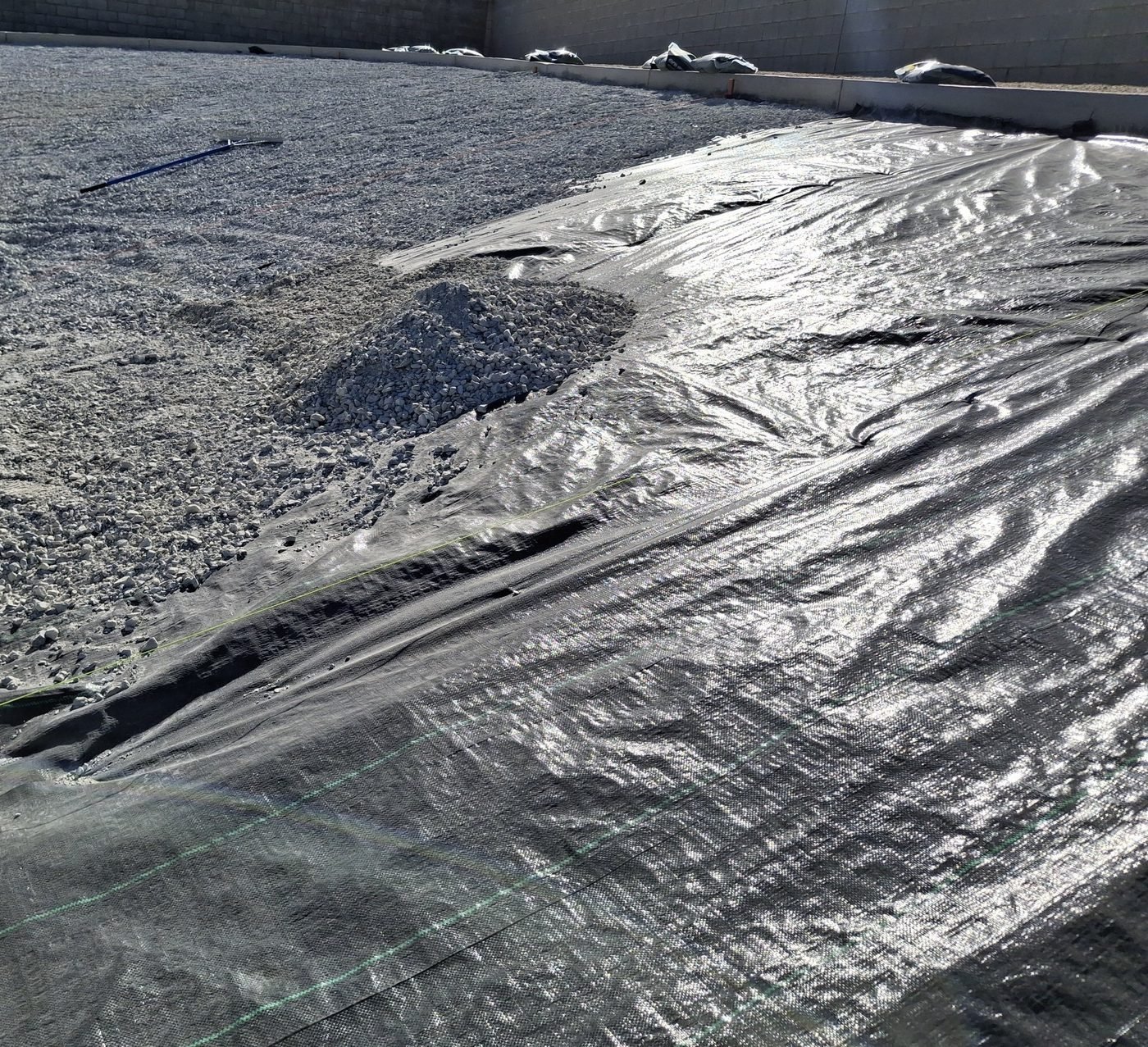
- Separation. Native soil stays below, base rock stays above, and neither mixes into the other.
- Drainage that lasts. A base that isn’t clogged with fines keeps moving water down and away from the turf.
- A stable surface. The fabric spreads the load over soft spots, so the lawn keeps its grade where people walk.
Questions to ask any turf bidder
If you’re comparing bids for a board or an owner, these questions show quickly who’s building a base and who’s just laying carpet:
- Is there a separation fabric between the native soil and the base?
- What base material do you use, how deep, and how is it compacted?
- How will water drain off and through the turf in each area?
- How are seams joined, and how are edges secured along curbs and walks?
- What infill goes in, and what does ongoing maintenance look like?
How SGT installs for HOAs and commercial properties
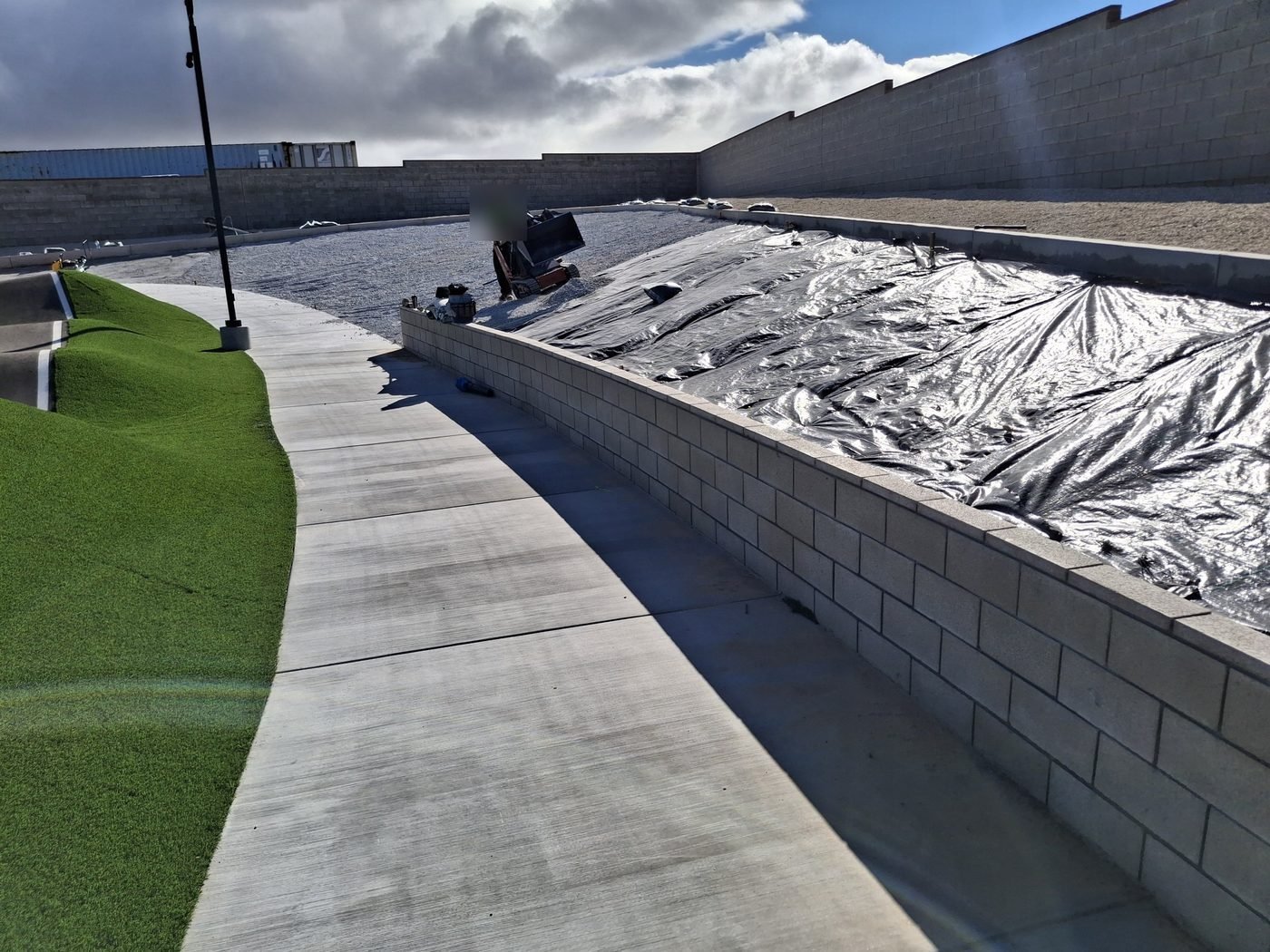
Synthetic Grass Techs is a turf-only installer. Our technicians are talented pros, and turf aesthetics are what they focus on: the finished lawn should look like it belongs there, from the street and up close. Here’s how a commercial or HOA project runs with us:
- Site walk and measure. We measure each area and help you map the decorative grass apart from the areas people use, so your board or ownership sees exactly what’s being converted.
- A clear written proposal. Square footage by area, turf choice, and a price your board or ownership can vote on. We can phase the work by area or budget year.
- Irrigation planning. Turf-only zones are capped. Zones that also feed trees and shrubs are kept, so the plants around the turf stay healthy. We coordinate with your landscape contractor.
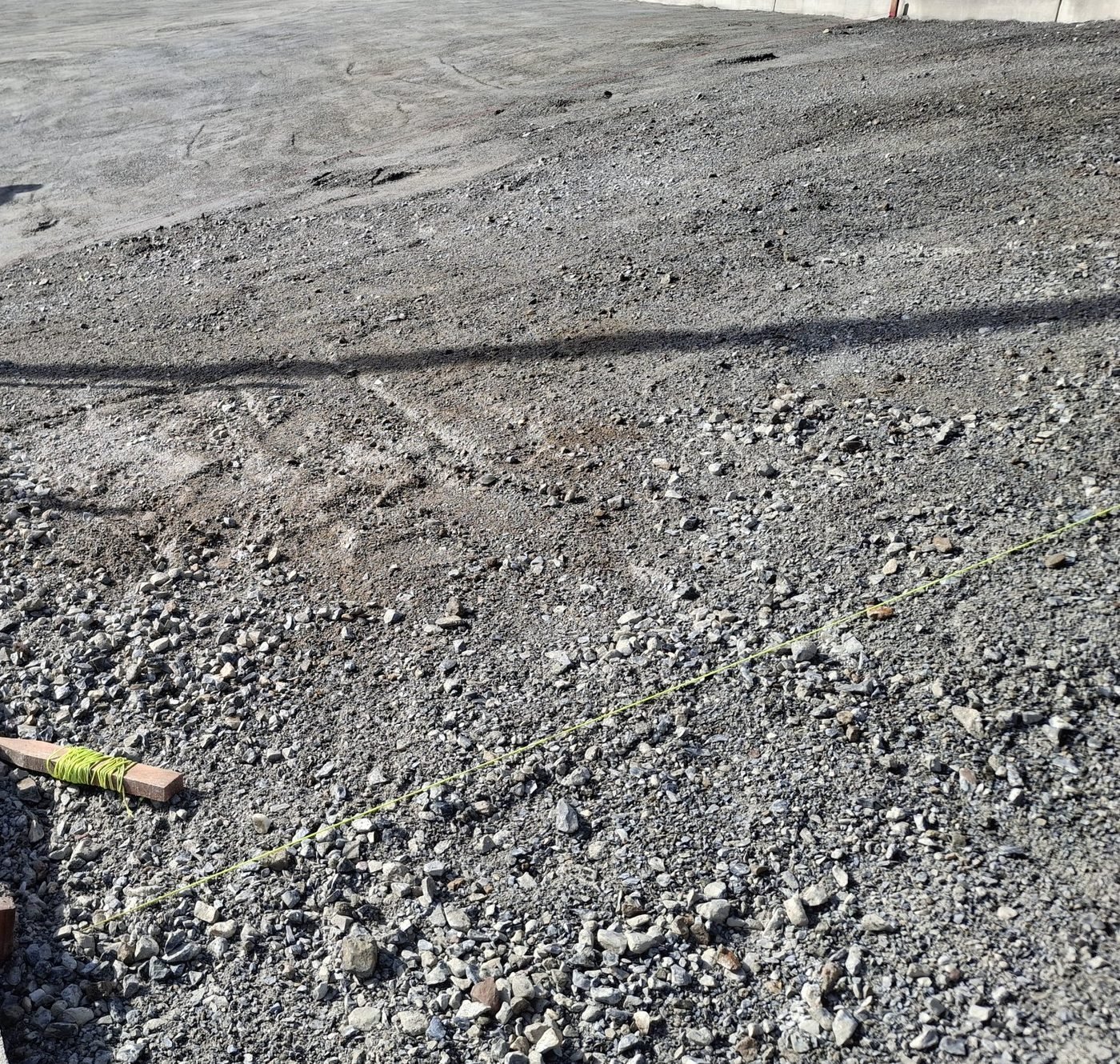
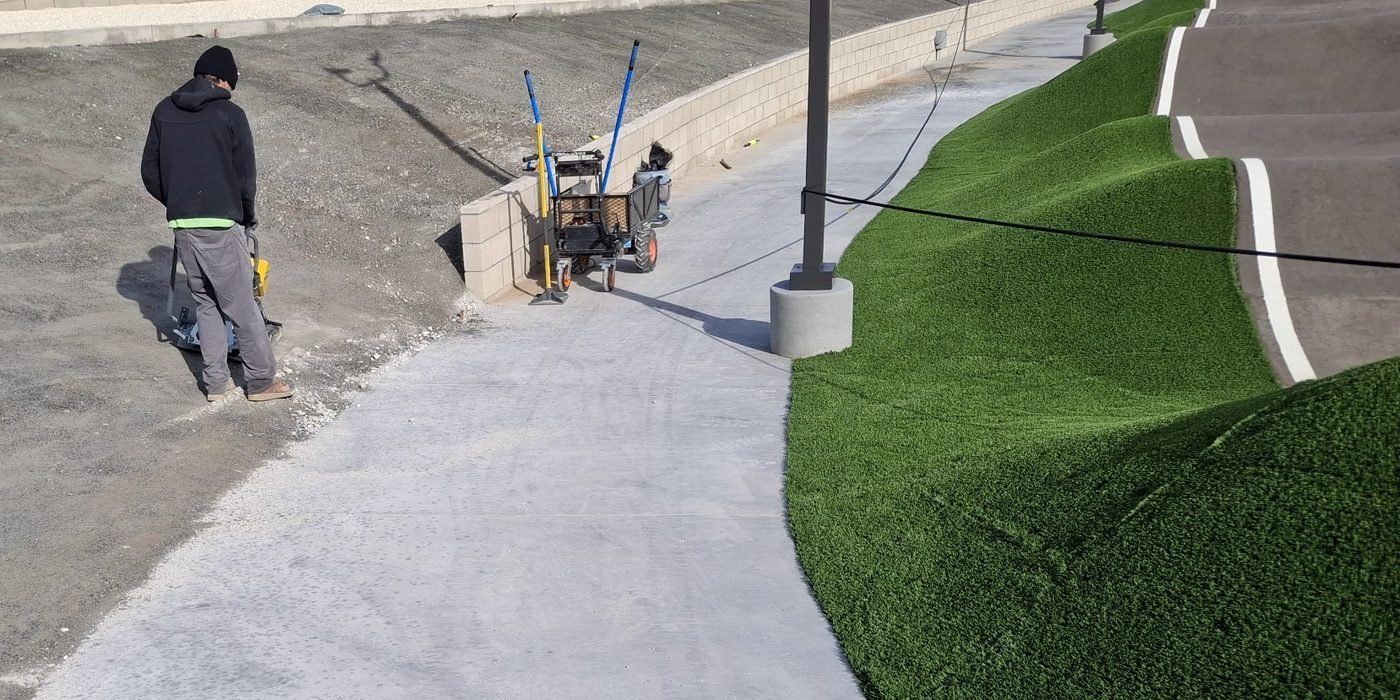
- Removal and base prep. Old grass and roots out, geotextile separation fabric over the native soil, then a graded, compacted crushed rock or decomposed granite base built for drainage. This is the part you never see and the part that decides how the lawn looks in five years.
- Precision seams and edges. Rolls laid with the grain running the same way, seams joined tight, and clean edges along every curb, walk and planter.
- Infill and grooming. Infill brushed in so the blades stand up, hold their shape and look natural.
- Clean, considerate work. Crews scheduled around tenants, residents and business hours, with the work area kept tidy and safe.
- Maintenance plans. Scheduled cleaning, brushing and infill top-ups keep high-traffic and highly visible areas looking new. See our maintenance guide.
A planning timeline for boards and managers
2028 and 2029 sound far off, but for an association or a commercial owner they’re only one or two budget cycles away. Bids, board approvals and scheduling take time, and installers’ calendars fill up as deadlines get close. A simple path:
- Now: walk the property, measure the decorative grass and get a proposal.
- Next budget cycle: add the project to the budget or reserve plan and get approval.
- Before the deadline: install, phased by area if needed, with the most visible frontage first.
One budgeting note: the regional turf replacement rebate doesn’t cover synthetic turf (SoCal Water$mart), so plan the project without counting on one. For pricing, see what artificial grass costs; commercial pricing depends on the size and layout of each area.
AB 1572 questions we hear from managers
Does AB 1572 apply to my home?
No. Single-family homes aren’t covered. It applies to public agency, commercial, industrial and institutional properties, and to HOA common areas. Your own yard inside an HOA isn’t a common area.
Does the law ban grass?
No. It bans watering nonfunctional grass with potable water. Functional grass that people use can still be watered, and decorative areas can be converted. Artificial grass is a popular way to convert them because it keeps the same green look.
Can we install artificial grass in parkways?
In many cities, yes, but some cities have their own rules for parkways and street frontage. We check the local requirements for your property before we quote.
What happens to the trees in our turf areas?
Trees aren’t covered by the ban and can still be watered. When we cap turf irrigation, we keep or adapt the water that serves trees and shrubs so they stay healthy.
How long does a commercial or HOA install take?
It depends on the square footage and how many separate areas there are. Many parkway and entry projects take a few days. Larger properties are often done in phases so the work never disrupts the whole site at once.
Where do you install?
Across Southern California, including Riverside, Corona, Moreno Valley, Menifee and Orange County. See all the areas we serve.
This guide is general information, not legal advice. Check with your water supplier or legal counsel about how AB 1572 applies to your property.
Get ahead of the AB 1572 deadline. Book a free site measure, call 951-251-4124, or text us the property address.