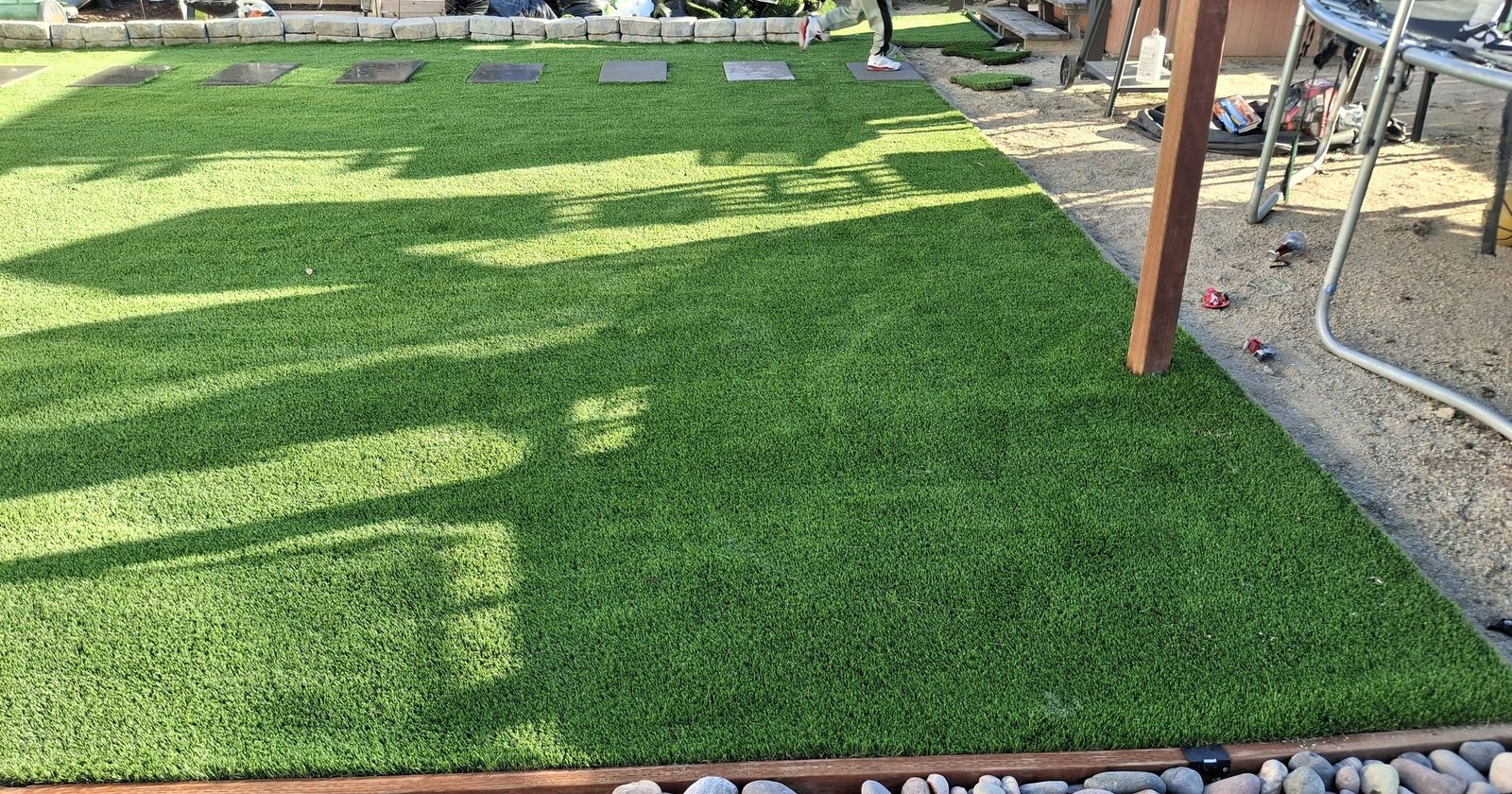
Is Artificial Grass Safe for Kids? What Parents Should Know
Parents ask us two things about artificial grass: what is it made of, and is it a good place for my kids to play? Both are fair questions, and the honest answers depend on the product and how it’s installed. Here’s what to look for.
Yes, when you choose tested turf and install it well. Our suppliers test their turf for PFAS and lead, and it has passed. We fill it with sand, not rubber, and it has no pesticides, fertilizer or mud. Plan for summer heat with shade and a quick rinse.
What’s in the turf: PFAS and lead
PFAS are the long-lasting “forever chemicals” that have made news in some synthetic turf. California now bans selling artificial grass with intentionally added PFAS, starting in 2026 (AB 1423).
Our suppliers test their turf for PFAS and for lead, and the turf we install has passed. All of our synthetic grasses meet or exceed minimum EPA requirements for substances such as lead, and our collection comes from U.S.-based manufacturers that follow strict safety and environmental standards.
That matters, because turf sold through overseas sellers and online marketplaces may not meet the same standards. Regulations vary by the country where a product is made. Whoever you buy from, ask what the turf has been tested for.
Sand infill, not rubber
Many sports fields use crumb rubber, made from ground-up tires, as infill. Our lawns don’t. We fill them with sand and top every lawn with acrylic-coated sand. In pet areas we mix in antimicrobial pet infill.
Clean, itch-free play
- No lawn chemicals. Artificial grass doesn’t need pesticides, weed killers or fertilizer.
- No mud and no grass stains. Kids can play right after a rinse.
- No itchies. Grass seeds and blades can irritate skin. Synthetic grass doesn’t, and it’s hypoallergenic, a plus for kids with grass allergies. Pollen from nearby trees can still land on it, so a rinse helps in spring.
Heat: the one thing to plan for
In full summer sun, turf gets hotter than living grass. Our acrylic-coated infill and heat-shedding blade shapes help, but shade over the play area, a rinse before play and play in the mornings and evenings help most. Read more in does artificial grass get hot.
Falls and play structures
Turf is softer than dirt or concrete, but it isn’t a cushion on its own. Under swings, slides and climbing structures, we can add safety padding under the turf so the area has more give.
Ideas for family yards
- A green lawn that stays usable all year, with no muddy season
- A play area under the swing set, with padding underneath
- A small putting green or a mini training zone
- A clean space for playdates, picnics and the family dog
Have a dog too? Kids and dogs share yards well. See artificial grass for dogs.
Coming soon: turf with a plant-based backing
For families who want the greenest option, we’re adding SGT Pro 131 to our top tier. It’s made with an organic backing derived from soybeans. Ask about it at your free measure.
Questions parents ask us
Is artificial grass toxic?
The turf we install has passed our suppliers’ PFAS and lead testing and meets or exceeds minimum EPA requirements for substances such as lead. We use sand infill, not rubber.
Is it sanitary?
It’s easy to keep clean: clear debris, rinse every week or two, and rinse pet areas more often. Our maintenance guide has the full routine.
Can kids play on it right after it’s installed?
Yes. There’s no seed to establish and nothing to wait on.
How long does it last?
Our turf carries a 16-year manufacturer’s warranty, and we back our installation work with a 2-year workmanship warranty.
What does it cost?
Most of our installations land between $8 and $12 per square foot, installed. See what artificial grass costs.
Planning a safer, cleaner place for your kids to play? Book a free measure, call 951-251-4124, or text us a photo of your yard.