Artificial Grass for Dogs: Pros, Cons and How to Keep It Fresh
Dogs and natural lawns don’t get along. Dogs dig, they run the same path along the fence until it turns to dirt, and they leave yellow spots wherever they pee. Then the mud comes inside. Artificial grass fixes most of that, as long as it’s built for pets. Here’s an honest look at what changes, what to plan for, and how we build dog-friendly lawns in the Inland Empire.
Yes, artificial grass works well for dogs. It ends the mud, the holes and the brown spots, and it stays clean with a quick rinse. Plan for two things: drainage and odor control under the turf, and shade and water for hot afternoons.
What changes when your dog gets a turf lawn
- No more muddy paws. There’s no dirt to track inside after it rains or the sprinklers run.
- No yellow spots. Urine burns natural grass. Synthetic turf stays green.
- No holes to fill. Dogs can scratch at turf, but there’s no soil on top to dig up.
- Fewer places for fleas and ticks to live. Without tall grass, thatch and damp soil, the lawn gives pests far less to hide in.
- No lawn chemicals on their paws. No fertilizer, weed killer or pesticide on the grass.
- Green all year. No muddy lawn in January and no brown lawn in August.
Owners usually notice the difference on their floors first. A turf yard means no mud on the couch, fewer baths, and a dog that can go outside any time without you worrying about what they’re rolling in.
Will it smell? How dog urine drains through turf
This is the question we hear most from dog owners, and it’s the right one to ask. Artificial grass is made to drain. Urine and rinse water pass through the turf’s backing and down into the base underneath. A turf lawn starts to smell when the urine has nowhere to go, or when it builds up between rinses.
Three things keep a dog lawn fresh:
- A base that drains. We build on compacted Class II road base or aggregate, with woven geo fabric between the base and the soil, so liquid moves down and away instead of sitting under the turf.
- Antimicrobial pet infill. In pet areas we mix antimicrobial pet infill into the infill sand. It sits down between the blades, right where urine collects, and helps keep the turf more hygienic for the animals that use it every day.
- A regular rinse. Hose down the spots your dog uses, more often in summer and if you have more than one dog. For stubborn odor, use an enzyme cleaner or deodorizer made for artificial grass.
Already have a turf lawn that smells? The cause is usually a base that doesn’t drain or infill that has never been cleaned. Text us a photo and we’ll tell you what we see.
What goes under a dog-friendly lawn
What’s under the turf matters more than the turf itself. Here’s how every lawn we install is built, from the top down. For dogs, layer 2 gets antimicrobial pet infill, and layer 7, the gopher wire, goes in wherever burrowing pests are a problem.
- Round acrylic-coated sandThe top dressing. Rounded grains coated in acrylic reflect heat and help the blades stand up.
- Base infill sand + antimicrobial pet infill optionalInfill sand settles between the blades for weight and support. In pet areas we mix in antimicrobial pet infill.
- Synthetic grassTurf cut, seamed and fitted to your yard, secured at the edges with perimeter tacking and 6-inch perimeter spikes.
- Decomposed granite (DG) toppingA fine finish layer that gives the turf a smooth, even bed.
- Class II road base or aggregateThe structural base the whole installation sits on.
- Woven geo fabricSeparates the base from the soil underneath.
- Pest control wire mesh optionalKeeps gophers and other burrowing pests out.
- SubgradeThe native ground under the installation.
We fasten the turf along every edge with perimeter tacking and 6-inch perimeter spikes, so a curious dog can’t pull up a corner. You can see each step in our installation process.
Does artificial grass get too hot for dogs?
Yes, it can. Any surface in direct summer sun heats up, and turf heats up faster than living grass. In a well-known measurement at Brigham Young University, a synthetic sports field averaged 117°F on a June day while natural grass averaged 78°F (New York State Department of Health fact sheet). That was a sports field with rubber infill, not a backyard, but the lesson holds: turf in full sun gets hot.
We top every installation with acrylic-coated sand, which reflects heat and reduces heat absorption compared with plain white sand, and our grasses use blade shapes designed to shed heat. That makes a real difference, but on a 100-degree Inland Empire afternoon, plan for the heat:
- Give your dog shade over part of the lawn: a tree, a patio cover or a shade sail.
- Rinse before afternoon play. Water cools turf quickly. Penn State researchers found the cooling fades as the sun warms the surface again, so rinse right before your dog goes out.
- Keep the water bowl in the shade.
- Use the 7-second test. If you can’t hold the back of your hand on the turf for seven seconds, it’s too hot for paws. Save play for mornings and evenings.
For more on heat, read does artificial grass get hot.
Choosing turf for a dog
When we bring samples to your home, these are the things we look at with dog owners:
- Drainage. How the turf’s backing drains, paired with a base that drains.
- Shorter, denser blades. They’re easier to clean and stand up better to running and turning.
- Where the dog runs. Fence lines and gate paths take the most wear, so it pays to keep seams out of those paths.
- Infill. Antimicrobial pet infill in the potty areas.
Vista Pet artificial grass is one of the turf options made for pet areas. See it in person at your free measure, or browse pet-friendly turf in our shop.
A simple cleaning routine for dog owners
| How often | What to do |
|---|---|
| Every day | Pick up solid waste. Rinse the spot if it was messy. |
| Every week in summer, every two weeks the rest of the year | Hose down the areas your dog uses most. |
| As needed | Use an enzyme cleaner or deodorizer made for artificial grass on potty spots. |
| A few times a year | Clear leaves and brush the blades against the grain where your dog runs. |
| Once a year | Check the infill and top it up where it has thinned out. |
Rather hand it off? We offer recurring maintenance for residential and commercial turf. For the full routine, read our artificial grass maintenance guide.
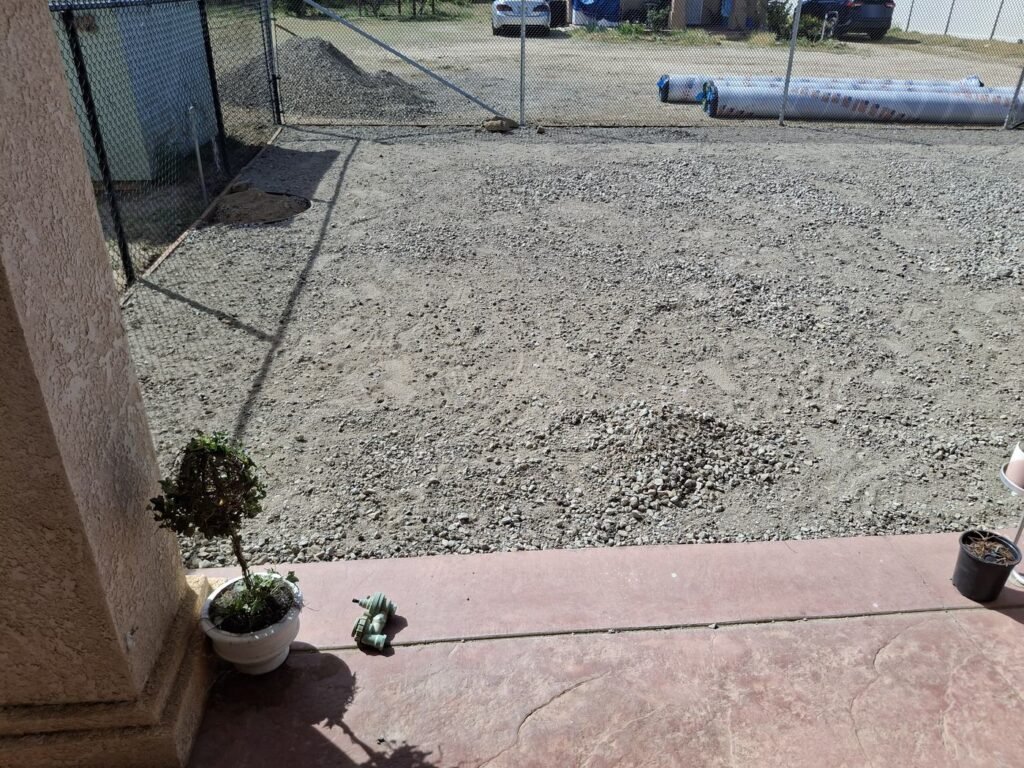
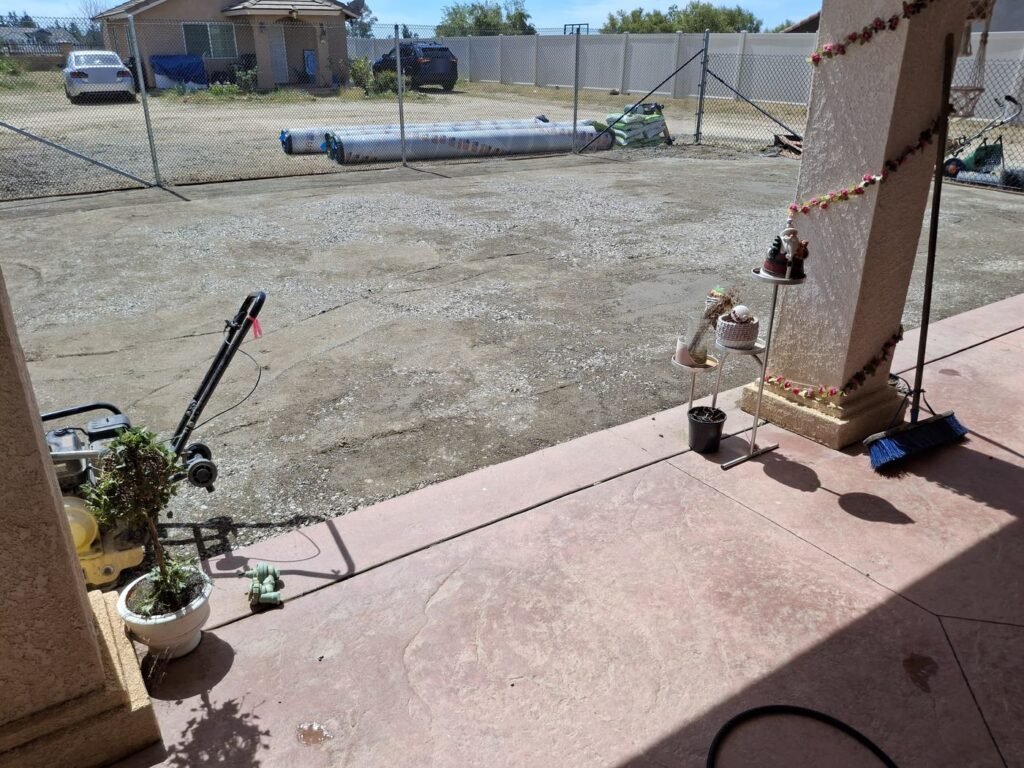
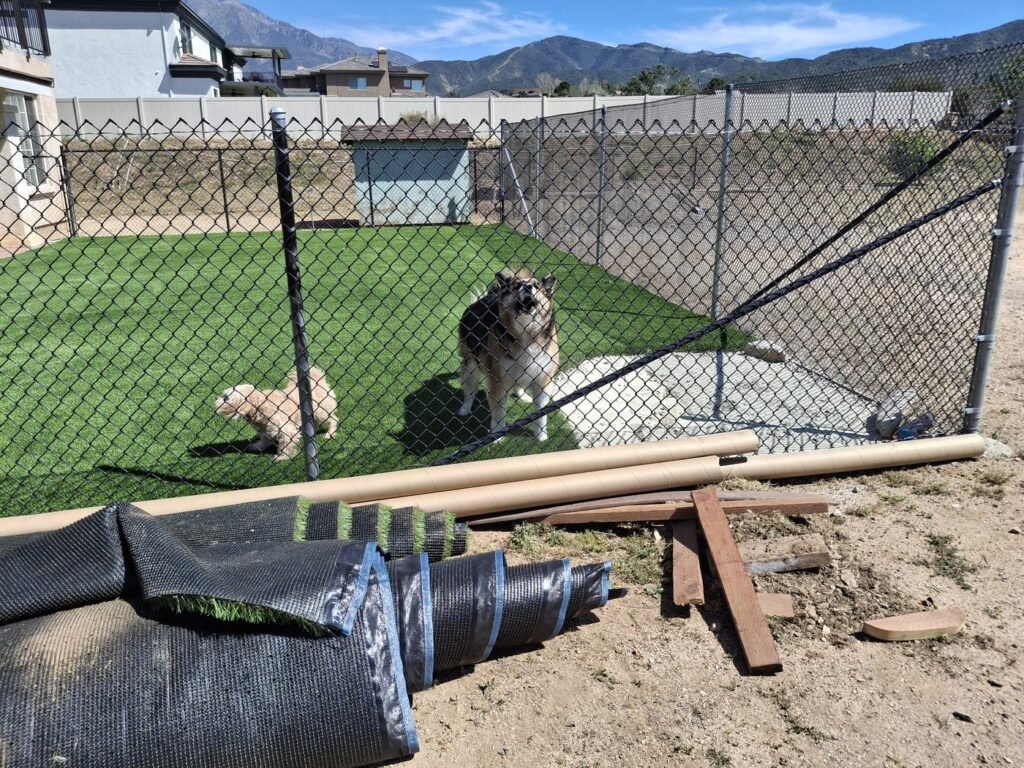
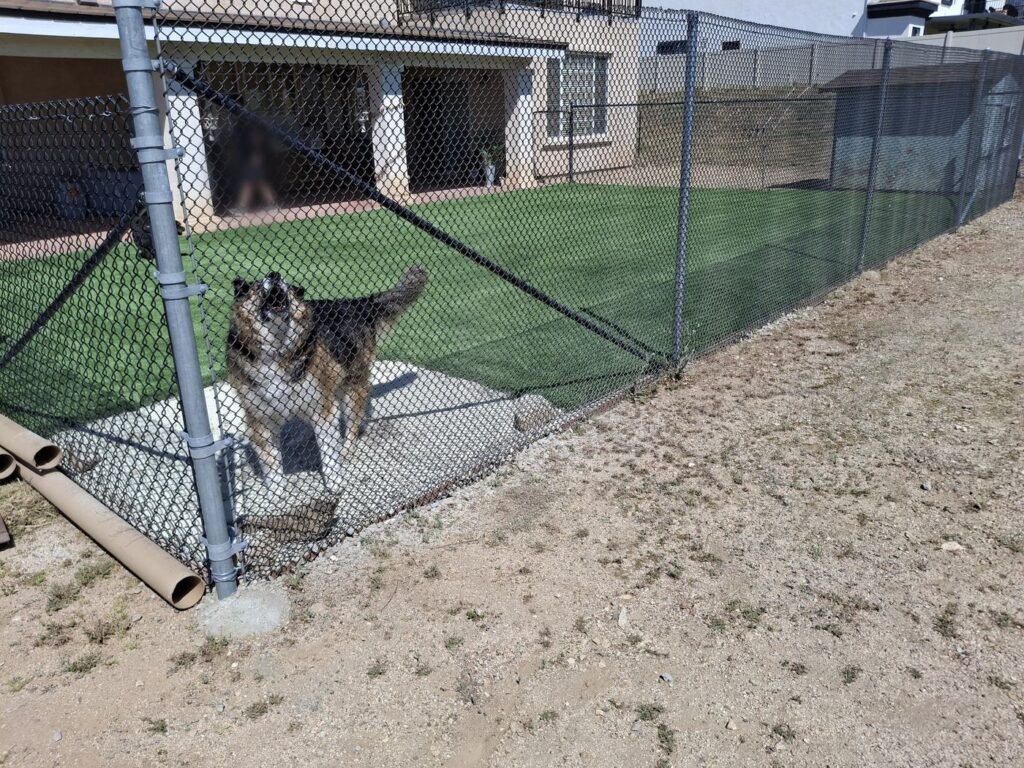
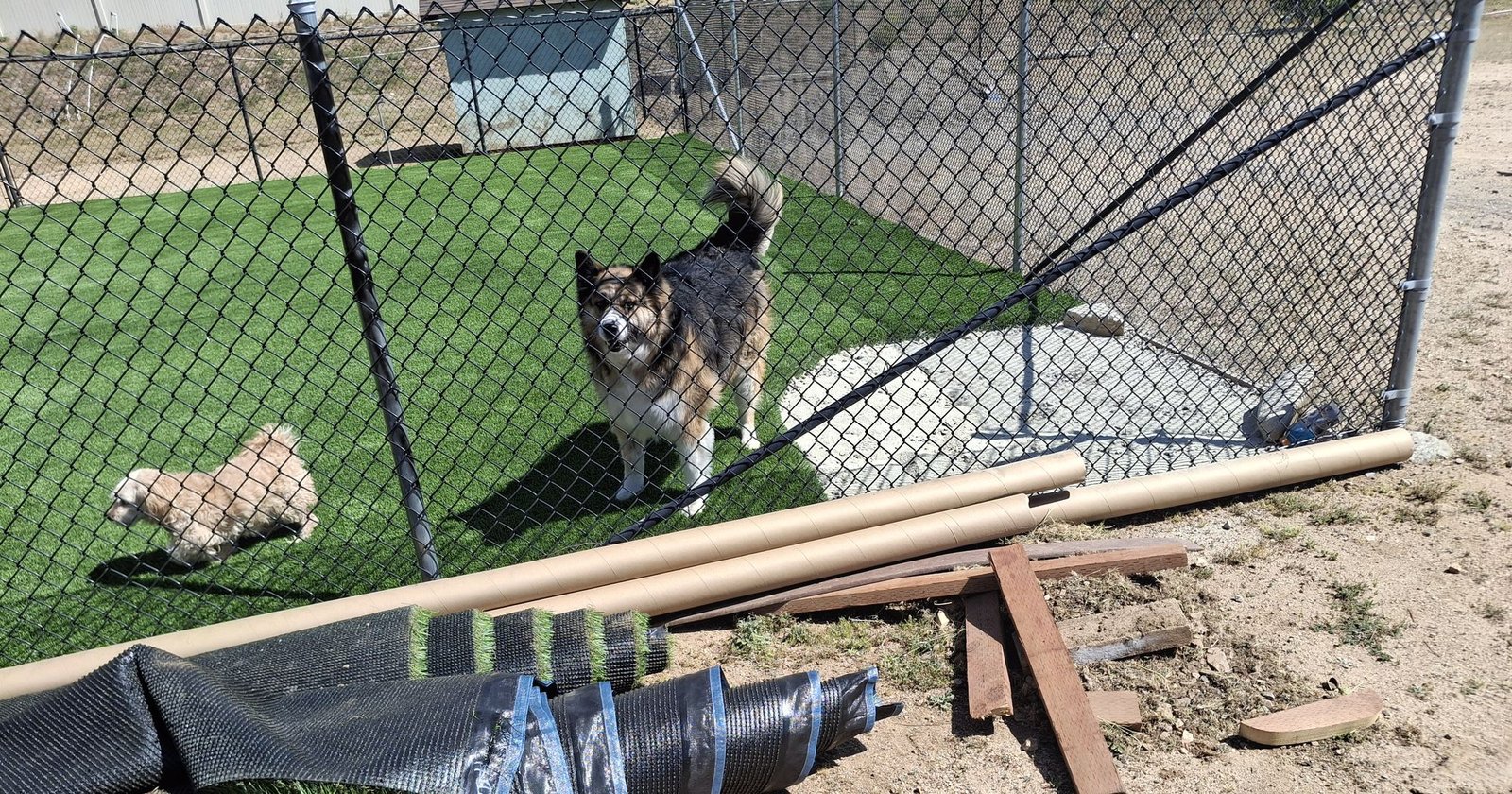
A dog run we installed this spring
This spring we turned a dirt dog run on a rural property into a clean turf area. We started with the irrigation and the prep, built and compacted the base, then laid the turf inside the chain-link run. The dogs were happy to test it out. Photos from that job are below.
Questions dog owners ask us
Can dogs dig through artificial grass?
They can scratch at it, but there’s no soil on top to dig into. Turf that’s properly secured at the edges and seams holds up to most diggers. If your dog is a determined digger, tell us at the measure and we’ll plan around their favorite spots.
Will my dog chew the turf?
Most dogs ignore it once it’s down. Puppies and heavy chewers may test the edges, so keep an eye on them for the first few weeks, the same way you would with a new rug.
Can I potty train a puppy on artificial grass?
Yes. Pick one corner near a hose bib as the potty spot so cleanup takes a minute, and rinse that spot more often than the rest.
Do I still need flea and tick prevention?
Yes. A turf lawn gives fleas and ticks fewer places to live, but it doesn’t treat your dog. Keep up the prevention your vet recommends.
Can turf go in a side yard or a narrow dog run?
Yes, and those are some of the best spots for it, because they’re where dogs wear natural grass down to dirt. We install pet turf in side yards, dog runs and full backyards across Riverside, Moreno Valley, Corona, Menifee and the rest of the areas we serve.
Is artificial grass safe for my dog and my kids?
Our suppliers test their turf for PFAS, the “forever chemicals,” and for lead, and the turf we install has passed. All of our synthetic grasses meet or exceed minimum EPA requirements for substances such as lead, and they come from U.S.-based manufacturers. More in is artificial grass safe for kids.
How long does pet turf last?
Our turf carries a 16-year manufacturer’s warranty, and we back our installation work with a 2-year workmanship warranty. A regular rinse and a yearly infill check keep a dog lawn looking good for the long haul.
How much does a dog-friendly turf lawn cost?
Most of our installations land between $8 and $12 per square foot, installed. Where yours falls depends on the turf you choose, how much prep and base work the yard needs, and extras like pet infill and gopher wire. See what artificial grass costs, or book a free measure for an exact price.
Ready for a yard your dog can use all year? Book a free measure, call 951-251-4124, or text us a photo of your yard.